
What on earth is hospitality design?
It's human
It's aesthetic
It's social
It's behaviour
It's human It's aesthetic It's social It's behaviour
By Michel Brokke
I am sitting at the bar of a certain establishment. Beside me is a gentleman ordering a pint. Across from me, a small group is gathering. Two of them, I suspect, are sharing a secret affair. This is the quiet magic of hospitality spaces. But how can so much of this unfold at once, in the same place? And how can that very same place feel both public and private? Far from home, yet making us feel as though we belong there? It is precisely for this reason that I find hospitality fascinating.

This fascination with hospitality did not begin at my university or in a design studio, but in a kind of existential unease, life at its less polished, shall we say. Through a childhood with the usual household bustle and an adult life of renovations, travels, and children, I discovered one constant haven: hotels. Or, more broadly, the hospitality sector.
These were places offering something increasingly rare: space simply “to be”. No roles, no pressure, no social spreadsheet. Anonymous, yet secure. This always brings me back to the same question: how does one design such spaces? In other words, how do you give meaning to places and services in which people can step away from the outside world, even if only for a moment? That question is where my modest thoughts about hospitality design & innovation begin.
From safety to meaning
Hospitality was once a matter of survival. When travel was dangerous, offering protection to strangers created a bond of mutual care: help given might one day be returned. This two-way relationship is built into the word itself, from the Proto-Indo-European ‘ghos-ti’, meaning both “guest” and “host”. As societies became safer, however, hospitality changed. What began as protection became something richer: not just safety, but care for the spirit.
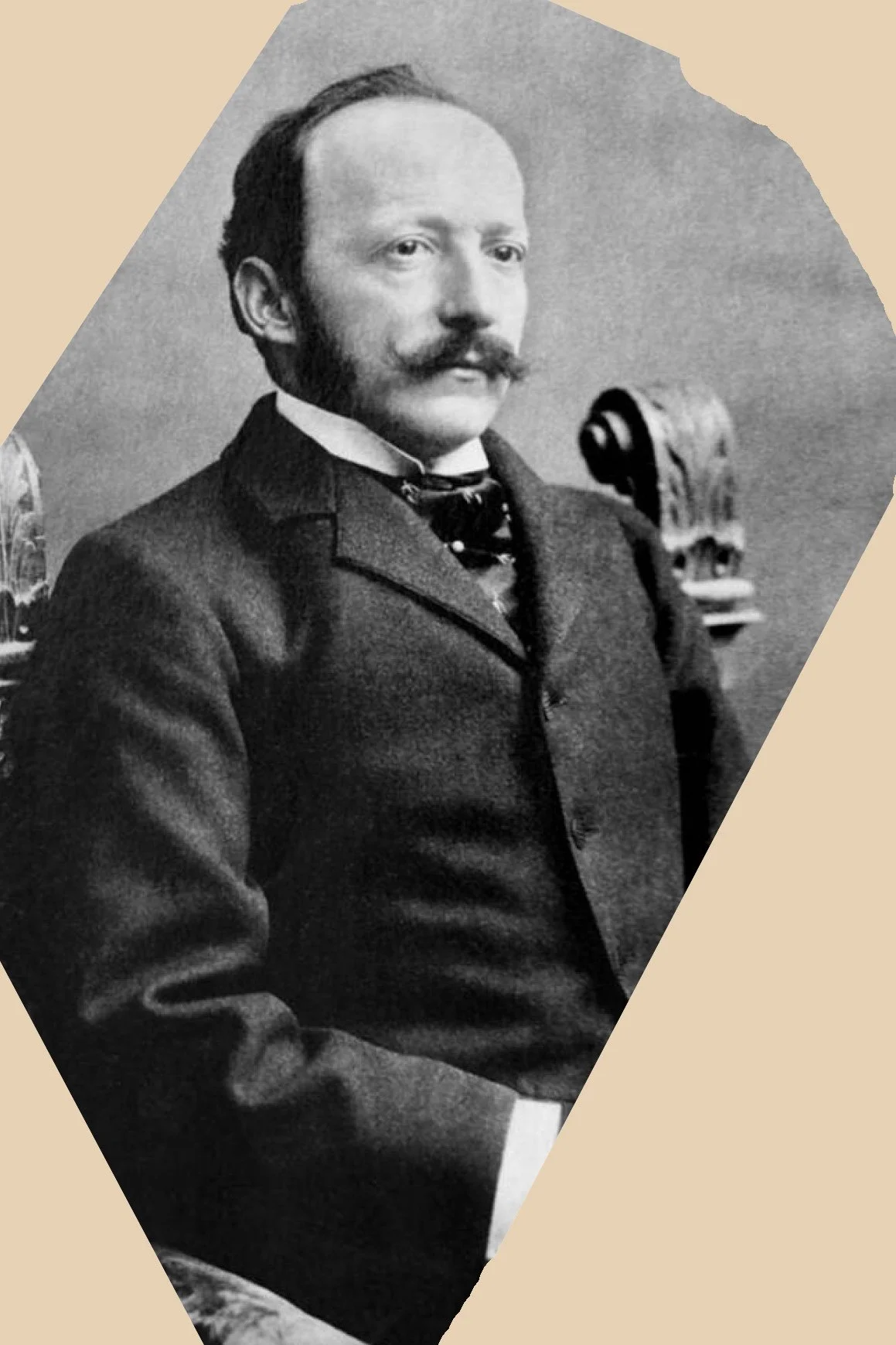
César Ritz in 1897
Archives of the Hôtel Ritz Paris.
Where others cite Albert Einstein, Charles Darwin, or Kim Kardashian, I find myself drawn instead to César Ritz, who, in the late nineteenth century, quietly perfected the art of turning travel from necessity into pleasure. From peace of mind to nourishing the spirit. In 1889, Ritz opened the Savoy in London and, by applying his famous approach of “anticipating needs,” he transformed hospitality from mere protection into a refined delight of the senses. Together with Auguste Escoffier, he professionalised hotels and restaurants into systems offering more than comfort: they offered surprise. Suddenly, aesthetics mattered, feeding the curiosity of a rising leisure class, and, in this way, hospitality became an art.
Yes: art. And this is precisely where design comes into play. Design is rooted in the arts and is, like hospitality, an often misunderstood phenomenon: it is both process and product, analytical and creative, marked by moments of bold clarity and others of near despair. I can tell from experience. Roberto Verganti defines it neatly as “giving new meaning to things”. I find that definition particularly interesting, as true innovation rarely comes from improving what already exists. Rather, it arises from reinterpretation.
In hospitality, this shows in the work of glamorous figures such as Walt Disney, Ian Schrager, Philippe Starck, Paul Bocuse, and Ferran Adrià. They did not merely design buildings or menus; they redefined what staying, eating, and meeting could mean. This again confirms that design is never just decoration, but rather the reinvention of meaning.
The Inside-Out Approach
Many design approaches begin with the user. At first glance, this seems reasonable, even democratic. Yet new meaning rarely emerges by simply following what users say they want. They don’t know. I argue that hospitality design must begin with the designer: with the designer’s stubbornly subjective view of the world.
This may sound controversial, but it makes sense to start from within. Users can tell you what frustrates them, but rarely what will surprise them at a fundamental level. As the story goes, Henry Ford once remarked that if he had asked people what they wanted, they would have said faster horses. Whether he actually said it or not, the point remains: innovation comes from imagining what people cannot yet see for themselves. Who, in 1908, would have expected to find an engine beneath his horse?
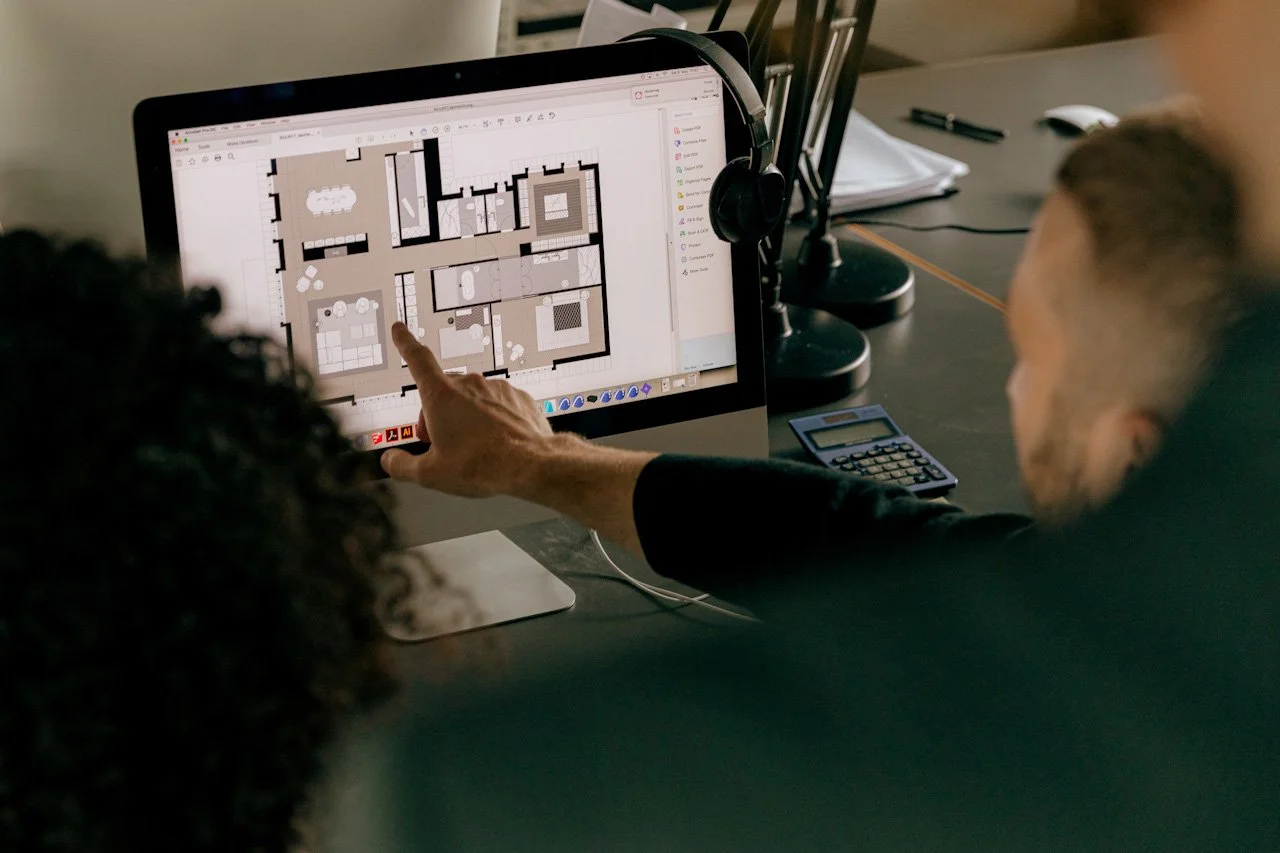
Therefore, designers must begin with informed intuition. This intuition is not mystical: rather, it is cultivated from a broad reservoir of knowledge through reading, listening, psychology, sociology, history, technology, and conversations with experts and, yes, also users. A designer’s intellectual courage always serves a project well. The broader the knowledge reservoir, the richer the intuition.
Subsequently, the user, or guest, re-enters the process once meaning is conceived. This is the validation stage: testing ideas and, from there, refining prototypes and observing guest behaviour. In this way, the design process cycles between exploration and selection, making hospitality design a highly iterative practice: we formulate meaning and then verify it in the world.
Story, Service, and Space
Hospitality design manifests in three interwoven elements: story, service, and space.
Firstly, the story is the foundation of any hospitality experience. Without it, there is no cohesion, no direction. A strong story therefore defines why a place exists and what it seeks to mean. Simon Sinek calls this the “why”. First the purpose, then the execution.
However, having a purpose is one thing, bringing it to life is another. This requires designing a narrative, similar to how Stephen King does in his novels, or Steven Spielberg in his first four Indiana Jones screenplays. Only stories can trigger emotions, and these shape behaviour far more than facts. Ilja Leonard Pfeijffer illustrates this in Grand Hotel Europa, showing how a hotel with a rich history can influence the way guests move and behave: troublemakers on the streets but royals inside. In other words, the story is not a cute garnish on the side: it is the compass of the whole design process.
Secondly, service is the relational dimension and operationalises the story through human behaviour. Whereas transactional service says, “I deliver what you ask for,” hospitality says, “I ensure you feel seen.” Serving a coffee is service, but noticing that one likes it with 4.2 grams of sugar, served at 62°C, and with three stirs counterclockwise is hospitality. Especially when delivering it before being asked. The difference lies in attention.
An environment for such a level of caring attention can be designed through two things: service blueprints and culture. Blueprints map the guest journey but must also leave room for what Will Guidara calls “unreasonable hospitality”: the unexpected, the generous, the human. This cultural layer brings those moments to life through language, rituals, uniforms, and other artefacts that allow hosts to tell the story in action. Without this dimension, service becomes mechanical. It needs culture, and designers must continually immerse themselves in art and culture to understand it. From William Shakespeare at the Royal Opera House to Khaby Lame on TikTok, this is why culture matters, especially when designing for international contexts such as hotels. Here, experiences must resonate across different nationalities, cultures and backgrounds.
And then, last but not least: space. This is the physical context and anchors the story and service in the tangible world. This environment shapes our behaviour and encourages social interaction. Therefore, designers need insight into how spaces affect emotions and attention, beyond the technicalities of architecture. They need to know how to make spaces more human.
Aesthetics play a central role in this, not simply as beauty, but as the study of sensory experience, as Bence Nanay notes. Understanding attention is key to creating something perceived as beautiful. Fallen leaves in your garden may feel untidy, yet the same leaves artfully arranged on a dining table may feel intentional, as a piece of art. The difference is not the leaves, but the shift of focus.
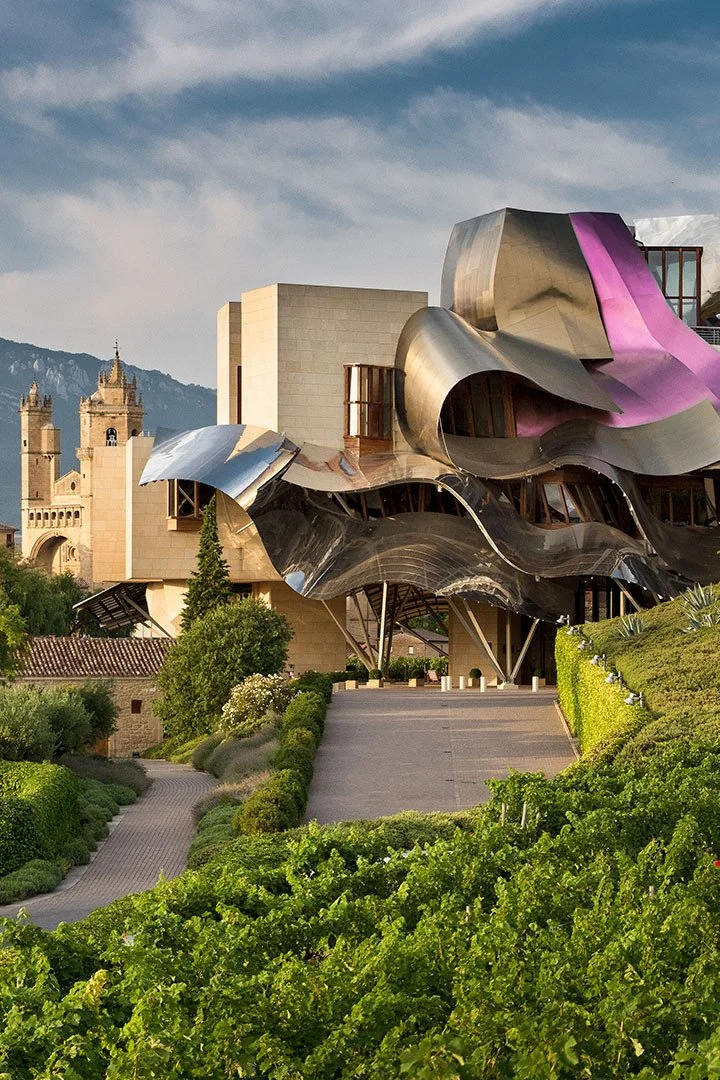
Hotel Marqués de Riscal, designed by Frank Gehry
Hotel Marqués de Riscal
Why hospitality design matters
With the possible exception of one’s spouse and children, nothing matters quite as much as hospitality design. That may sound slightly excessive, but bear with me. Hospitality design shapes both individual experiences and collective dynamics, and the effects are often more significant than they first appear.
Consider the Guggenheim Museum Bilbao by Frank Gehry, an example of human-centred architecture in a world dominated by standardised glass-and-concrete boxes. Before 1997, Bilbao was a gritty industrial city in northern Spain, not quite regarded as a destination for visitors. Gehry’s radical, sculptural museum transformed that perception entirely, attracting millions. This phenomenon, widely referred to as the “Bilbao effect,” illustrates how one piece of bold, human-centred design can reshape an entire city.
Gehry later pursued a similar vision in Elciego, Rioja, with the Marqués de Riscal Hotel, turning a remote wine village into an international destination. In these instances, the building itself became the attraction. Artful hospitality spaces, therefore, do far more than facilitate stays; they draw people, investment, and new narratives to their location.
“Whatever you do, promise me that every project you make or design you’ll take the risk of doing something for humanity.”
The social value of hospitality is not confined to grand landmark venues alone: it is just as present on a smaller scale. In The Philosophy of the Pub, Hans Schnitzler captures this idea with precision. The pub occupies a space between private and public life. It is neither the intimacy of home nor the anonymity of the street, but something gently in between.
In that intermediate space, a lawyer and a street cleaner may sit side by side at the bar, unfiltered and unmoderated. They might agree only on the quality of the beer, nothing else, and exchange their opposing views. In this way, the traditional pub on the corner of the street ensures that different worlds meet. In an age of algorithmic echo chambers, that feels like a small but genuine miracle.
This, for me, is the task of contemporary hospitality design-driven innovation: to revive the pub, make hotel lobbies meeting places, and design restaurants where generations dine together. When hospitality is designed with social value in mind, it nourishes hospitality businesses, society, and, perhaps even, democracy. Let hospitality designers give oxygen to human connections that would otherwise not take place.

Who Is Hospitality Design For?
Hospitality design is not only for hotels and restaurants in need of innovation. It matters wherever people share space: in offices, public buildings, shops.
For entrepreneurs, it is a practical advantage. Prices can be undercut. Efficiency can be copied. But how it feels to enter a place, to sit and to stay, is far harder to imitate. A clear story, space, and service culture make the difference between a transaction and a go-to place.
For students, hospitality design is about behaviour. It asks simple questions: Do people meet or avoid each other? Do they linger or leave? Does the space invite conversation, or discourage it? And for academics, it offers a meeting point between disciplines. It connects the arts, science, business and philosophy in a practical way.
In that sense, design-driven innovation is both business and culture, with very real consequences for the world around us. It is, for better or worse, our quiet duty to make life a little more human. Humanité par l’hospitalité, César Ritz might have said.